
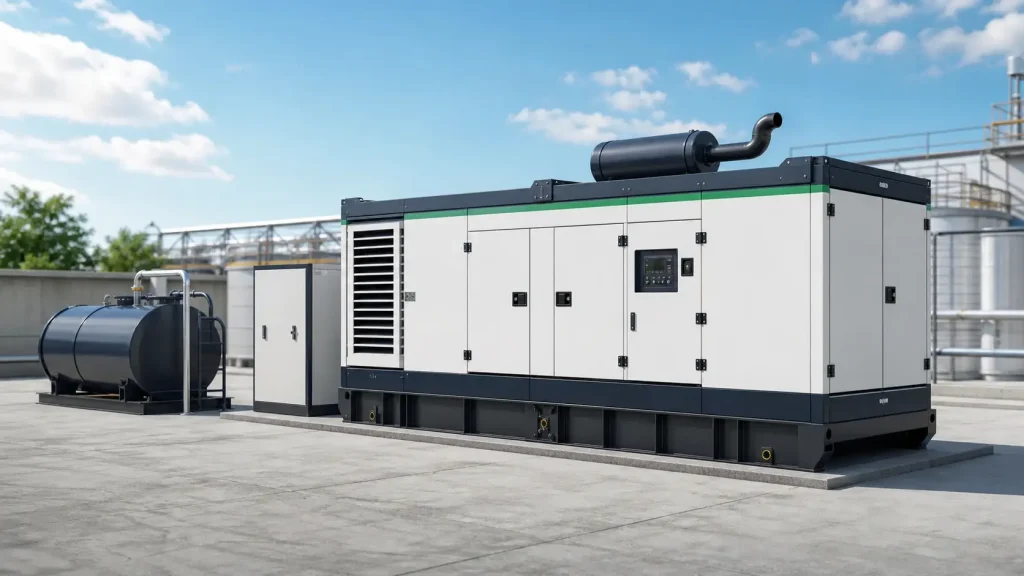
On an off-grid or backup site, diesel is almost always the largest operating cost over the life of the system. Solar and storage are added to reduce it — but a hybrid system that is sized the way a grid-tied system is sized will burn nearly as much fuel as the generator did on its own, and it will fail on the first motor start.
This guide covers the decisions that actually determine whether a solar + generator hybrid saves fuel or just adds capital cost. It is written for the person specifying the equipment, not for the person selling it.
Why hybrid instead of either system alone
A generator sized for a site’s peak load spends most of its life running at a small fraction of that load. A solar and battery system sized for the site’s worst-case autonomy period costs several times what the load profile actually requires. Each system is weakest exactly where the other is strongest.
The hybrid works because the two cover different parts of the load profile:
- The battery covers the short, sharp events. Motor starts, evening peaks, the first seconds after a transfer. These are the events that force a generator to be oversized.
- The photovoltaic array covers the predictable daytime base. On most industrial and telecom sites the daytime load is the largest and most stable block of consumption.
- The generator covers everything else — multi-day low irradiance, seasonal load, and the tail of the autonomy period that no reasonable battery would be sized for.
The point of the design exercise is to move as much energy as possible out of the third category and into the first two, without buying battery capacity you will use twice a year.
The three numbers that decide the design
Before any equipment is selected, three numbers have to come from the site. They are not optional, and they are not the numbers that appear on a generator nameplate.
- The measured load profile, at a resolution fine enough to see peaks — ideally 15-minute or finer data over at least several weeks, covering the site’s worst season. An annual average hides the peaks that size the inverter.
- The largest single starting event — the biggest motor or compressor on the site, its starting method, and how long the inrush lasts. This is usually the number that surprises people.
- The longest period the site must ride through without sun and without refuelling. This is an operating decision, not a technical one, and it depends on how far the site is from a fuel delivery.
If a project proceeds on a nameplate rating and a guess, every number below will be wrong. The same point is made in our guide to off-grid industrial site power: the most common single failure in hybrid sizing is not the solar calculation, it is that nobody measured the load.
Sizing the generator: it is not sized by average load
A generator has two constraints that pull in opposite directions, and both are easy to miss.
Minimum load — the low-load problem
Diesel engines are designed to run loaded. Run one continuously below roughly 30–40% of its rated output and unburned fuel accumulates in the exhaust — commonly called wet stacking. It shows up as black residue at the exhaust, and over time it damages the engine and shortens service intervals. The exact threshold is engine-specific and belongs in the manufacturer’s manual, not in a general guide.
This is why “add solar and keep the existing generator” often fails to save as much fuel as expected. As solar covers more of the daytime load, the generator runs fewer hours — and those hours get lighter. If the remaining load drops below the engine’s healthy operating band, the generator either has to be downsized or the control strategy has to change so that it runs in fewer, heavier blocks.
Maximum surge — the motor-start problem
Across-the-line motor starts can draw several times the motor’s running current for a few seconds. A generator sized to the running load will stall or trip on that event. The hybrid gives you a better answer than buying a bigger generator: let the battery inverter carry the surge.
That changes the generator requirement. Instead of rating the generator for peak plus inrush, you rate it for the sustained load it can run efficiently at, and you specify the inverter’s short-term overload capability to cover the surge. The two numbers have to be checked against each other in the same design, or you will end up with a generator that is still oversized.
Sizing the battery: cover the gap, not the whole load
The instinct is to size the battery for autonomy — enough capacity to run the site for the worst-case number of sunless days. On most sites that is the wrong economic answer, because the cost of that last day of autonomy is very high and the generator can cover it at a fraction of the capital cost.
A more useful way to frame it is to ask what the battery is actually being paid to do:
- Absorb the surge events so the generator can be smaller. This is usually a power requirement, not an energy one.
- Shift the evening peak so the generator does not run for a two-hour block at night.
- Smooth the solar output so passing cloud does not trigger a generator start every few minutes.
- Cover a defined short autonomy window — long enough that the generator is not started for trivial reasons, short enough that the capacity gets used regularly.
Only the last item is an energy sizing question, and it should be sized against the load profile rather than against a round number of days. The parameters that govern it are set out in our BESS specification guide; what a given cabinet delivers for your site depends on your load and your temperature range, and it should be calculated rather than assumed.
Sizing the PV array: how much diesel it actually displaces
The fuel a photovoltaic array displaces is governed by the shape of the load, not by the array’s rated capacity. Three site types behave very differently:
- Daytime-dominated loads (water pumping, irrigation, refrigeration, most telecom shelters with daytime cooling) are the best case. Solar is consumed directly as it is generated, and the generator stays off for most daylight hours.
- Evening-dominated loads (lighting-heavy sites, shift accommodation, some fleet depots) need storage to make solar useful. The array can be large and still displace little fuel if the battery is small.
- Flat 24-hour loads (monitoring, communications, continuous process loads) are the hardest case. Solar can only cover the fraction of the load that coincides with irradiance hours — which is why telecom site designs tend to be autonomy-driven rather than energy-driven.
A practical consequence: on a flat-load site, increasing battery capacity past a certain point buys very little additional fuel saving, because the limiting factor is that the sun is only up for part of the day. The money is usually better spent on a modest array increase and a generator that runs efficiently in fewer blocks.
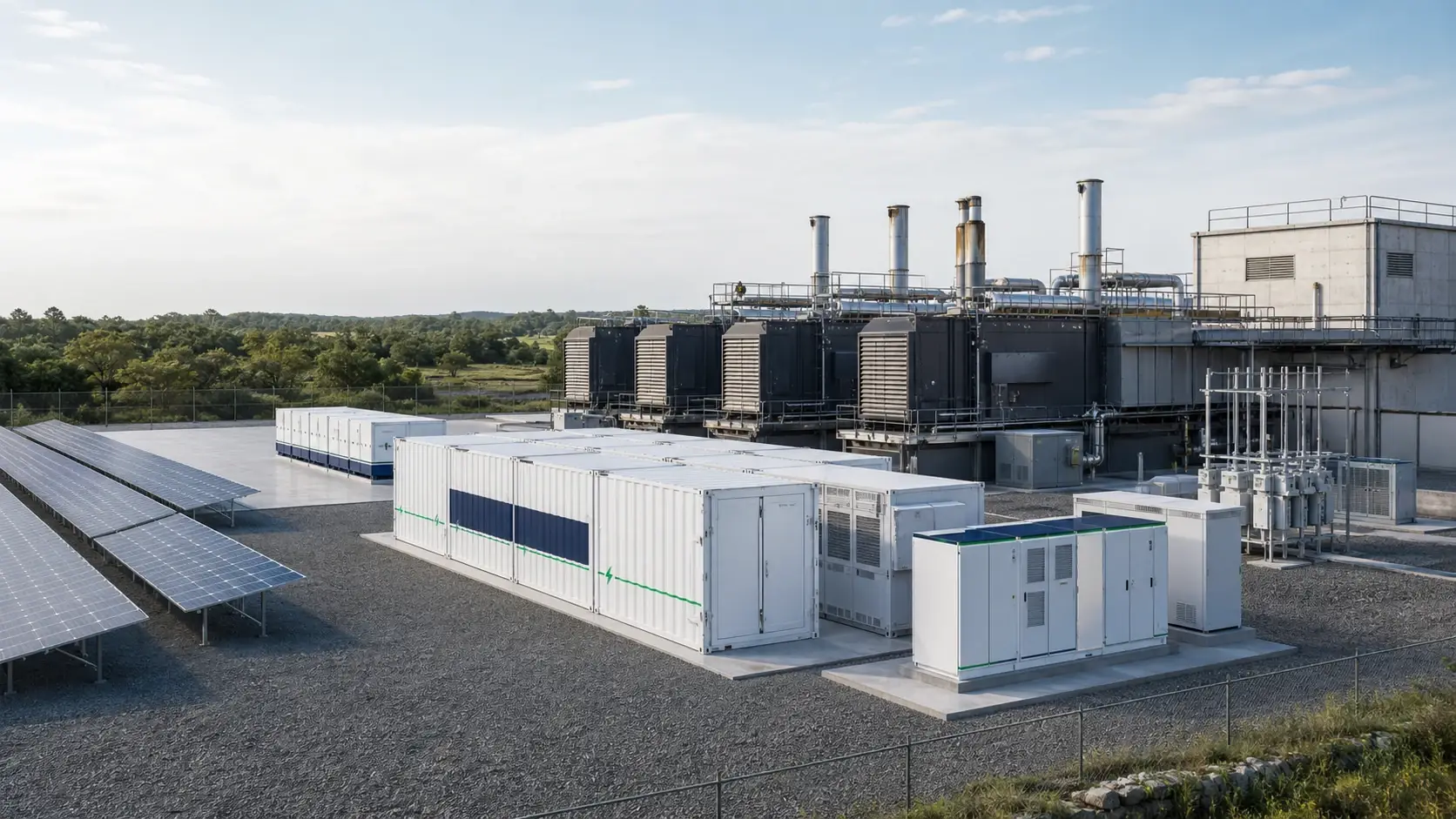
Transfer logic: when the generator starts and stops
A hybrid system’s fuel consumption is decided as much by its control strategy as by its hardware. Poor logic produces exactly the failure mode you were trying to avoid: a generator that starts and stops all day, running light and rarely reaching temperature.
The settings that matter:
- Start threshold on state of charge. The generator should start before the battery is deeply discharged, so the battery is not the limiting element during the start transient.
- Hysteresis between start and stop. The stop point must be well above the start point. Without adequate hysteresis the generator short-cycles — which is both a fuel problem and the fastest way to an engine that needs rebuilding.
- Minimum run time. Enforce a floor on run duration so the engine reaches operating temperature every time it starts.
- Battery charging rate while the generator runs. The generator should be loaded meaningfully while it is on — charging the battery is useful load, and it is the reason the generator can run in the healthy part of its band instead of idling.
- Grid-forming behaviour. In an off-grid AC-coupled system, something has to establish the voltage and frequency reference. If the generator and the inverter both try to, they will fight. This is a specification question to resolve before equipment is ordered, not a commissioning problem.
AC coupling versus DC coupling
Both architectures are legitimate, and the choice is usually constrained by what already exists on site.
- AC coupling connects the solar inverter and the battery inverter on the AC bus alongside the generator. It is the practical choice for retrofits and for adding storage to an existing generator-backed site, and it keeps the equipment selections independent. It requires an inverter that can operate grid-forming and manage the generator interface.
- DC coupling charges the battery from the solar array through a shared charge controller. It avoids a conversion stage and is efficient for new-build systems where the array and battery are specified together. It constrains the DC voltage window across both the array and the battery, so the two selections are no longer independent.
For a site that already has a generator and a distribution board — which describes most hybrid retrofits — AC coupling is usually the shorter path, and it keeps the generator’s existing transfer equipment in service.
What actually goes wrong on site
The failure patterns below are the ones that show up repeatedly in hybrid commissioning and first-year operation. None of them are exotic.
- Generator sized for the old peak, never resized. Solar and storage reduce the load the generator has to serve, but nobody re-rates the generator — so it runs below its healthy band and wet-stacks.
- Motor inrush not measured. The largest starting event on the site is estimated rather than measured, and the inverter’s surge capability is not checked against it.
- No hysteresis in the control logic. The generator short-cycles on passing cloud.
- Battery charged below its low-temperature limit. Charging a lithium battery below its specified charge temperature causes damage that is not covered by cycling warranties. On cold sites this is a specification item — enclosure heating or a charge-temperature interlock — not a detail.
- Fuel and servicing left out of the operating model. The fuel saving is real, but the generator still needs to be run, serviced and fed. A hybrid site with a neglected generator has the same outage risk as a generator-only site — see the maintenance intervals in our solar plant O&M guide.
Specification parameters to fix before you request a quote
Having these settled makes the difference between a quote that can be compared against another and one that cannot.
Reference table
Swipe horizontally to view all columns →
| Item | What to specify | Why it changes the design |
|---|---|---|
| Load profile | Interval data over the worst season, with peak resolution | Sets inverter power and generator rating |
| Largest starting event | Motor rating, starting method, inrush duration | Decides whether the generator or the inverter carries the surge |
| Autonomy window | Hours or days, as an operating decision | Sets battery energy; drives most of the capital cost |
| Generator minimum load | From the engine manufacturer’s manual | Determines whether the generator must be downsized |
| Control setpoints | SoC start, SoC stop, minimum run time, charge rate | Determines actual fuel consumption |
| Ambient temperature range | Low and high, with duration | Sets battery charge limits and enclosure requirements |
| Coupling architecture | AC or DC, and who is grid-forming | Constrains which inverters and controllers are compatible |
| Fuel logistics | Delivery interval and access | Realistically bounds the autonomy requirement |
How we supply hybrid projects
We supply the equipment for hybrid and off-grid systems — photovoltaic modules, battery storage up to and including containerised BESS, inverters, mounting structures and the distribution and switchgear that connects them. Confirm U.S. stock availability for the selected equipment and agree the documentation package and delivery schedule with the quotation.
Two things are worth stating plainly. First, we supply equipment – and installation scope and any required licensed contractor are confirmed separately for the project location – but we do not set the control strategy for you. The setpoints in the table above have to be commissioned against your site. Second, we will not give you a generic autonomy figure or a generic fuel-saving percentage. Both depend on your load profile and your configuration, and a number given without them would be wrong for your project.
What we will do is work from the measured load profile you give us, size the array and the battery against it, and tell you where the generator can be reduced. Send the load data with the enquiry and the sizing comes back against your numbers rather than against assumptions.
BUYER CHECKLIST
Buyer considerations for this scope
Measure the load before you size anything
A hybrid sized from a nameplate rating and a guess will be wrong on every number that follows. Ask for interval data across the worst season, and identify the largest single motor start on site. Those two numbers set the inverter power and the generator rating.
Check the generator's minimum load rating
Diesel engines run poorly below roughly 30-40% of rated output, and the exact threshold is engine-specific. Once solar covers more of the daytime load, the generator's remaining hours get lighter – check whether it should be downsized before you assume the fuel saving is free.
Ask who is grid-forming
In an off-grid AC-coupled system something has to establish the voltage and frequency reference. If both the generator and the inverter try to, they will fight, and that is a specification question to settle before equipment is ordered.
PRACTICAL ANSWERS
Questions buyers ask about this
Can I add solar and storage to an existing generator?
In most cases yes, and it is the most common hybrid retrofit path. The checks that matter are the generator's minimum load rating, whether the battery inverter can operate grid-forming alongside it, and how the existing transfer equipment handles the change. If the generator will end up running much lighter than before, it may need to be downsized rather than retained.
How do I stop the generator from short-cycling?
Enforce adequate hysteresis between the state-of-charge start point and the stop point, and set a minimum run time so the engine reaches operating temperature on every start. Without both, a passing cloud can start and stop the generator repeatedly, which wastes fuel and is the fastest route to an engine rebuild.
Should the battery be sized for full autonomy?
On most sites that is not the economic answer. The last day of autonomy is the most expensive capacity you will buy and the least used, while a generator can cover it at a fraction of the capital cost. Size the battery against the load profile and a defined autonomy window instead of against a round number of days.
Who sets the generator start and stop setpoints?
These have to be commissioned against your site, not copied from a datasheet. We supply the equipment and ship the documentation with it. Inside our California service area our own licensed crew performs the installation; outside it your licensed contractor does. Either way we do not set the control strategy for you – ask whoever commissions the site to confirm the setpoints against the measured load before sign-off.
EXPLORE FURTHER