
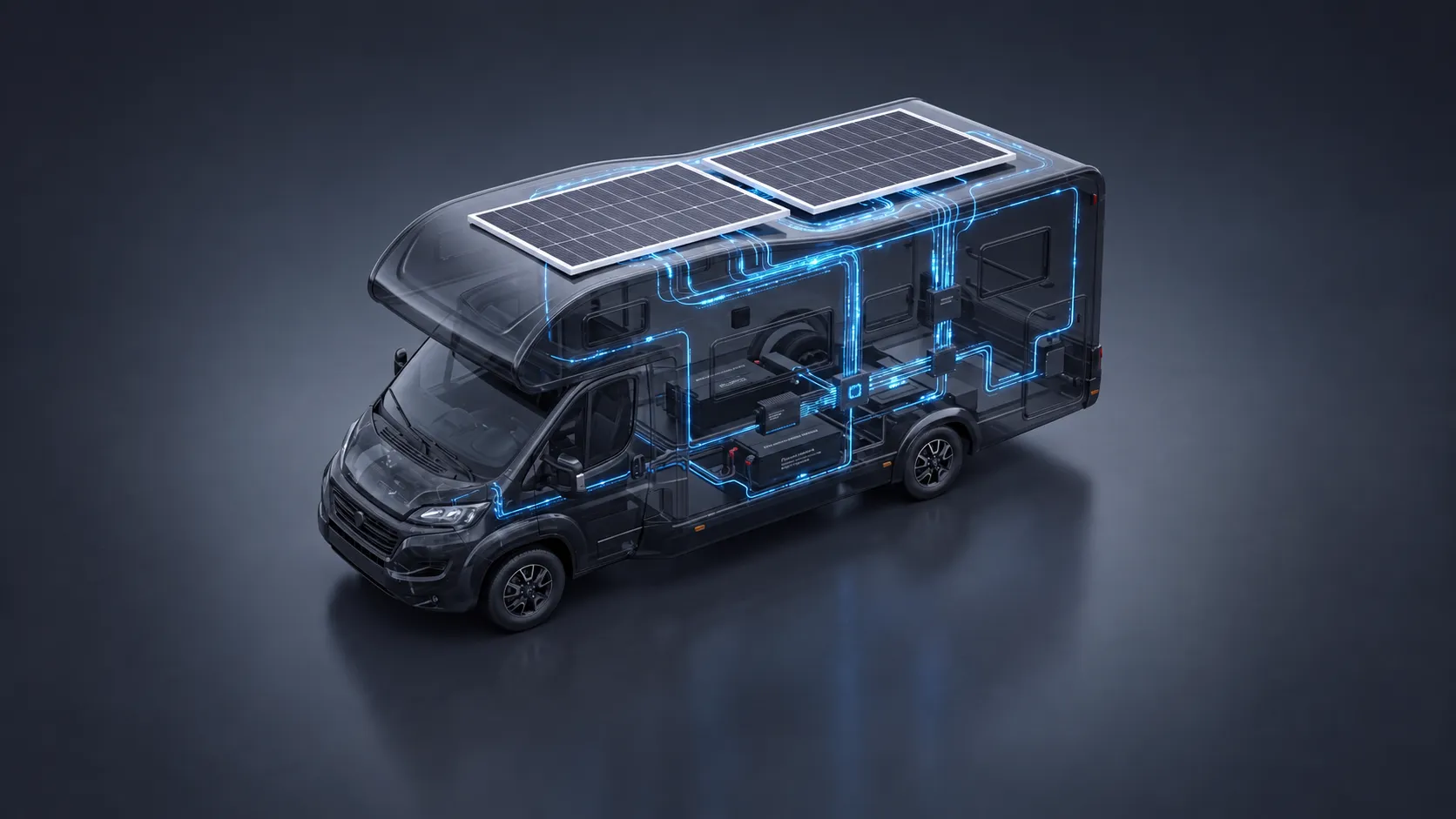
Mobile · Marine auxiliary power
Mobile & Marine Auxiliary Power
Solar, charge control and LiFePO4 auxiliary-power equipment for boats, yachts, RVs and field-service vehicles — matched to the loads, installation space and operating conditions of each platform.
- Project-matched selectionEquipment, quantities and interfaces reviewed with your team
- U.S. warehouse inventoryDirect delivery to your specified U.S. location
- Documentation supportCertification documents for the selected equipment
Share your project location, quantities and target schedule — we confirm availability and a tailored quotation.
Equipment scope
Specify around the platform.
Mobile and marine systems must work within real deck, roof or canopy space, DC architecture, vibration and weather exposure. We help buyers define a practical equipment path before ordering.
Platform solar
Durable module options sized for decks, cabins, roofs and mobile enclosures.
DC energy management
MPPT and DC charging equipment aligned with the platform’s solar input and DC architecture.
Usable stored energy
LiFePO4 storage sized around lighting, refrigeration, communications and auxiliary loads.
Before quotation
Confirm the project conditions first.
Supply scope: equipment selection, material supply and documentation coordination. Permitting and site installation are completed by the buyer’s qualified installer or contractor where required.
- Platform type, usable deck, roof or canopy area, and installation constraints.
- Existing DC voltage, battery chemistry, auxiliary loads and expected runtime.
- Delivery location, quantity, timing and requested documentation.
Platform project matching
Match auxiliary-power equipment to the platform and its operating profile.
Mobile and marine auxiliary power is shaped by platform space, DC architecture, exposure and the actual duty cycle. We help align a supply brief around those operating conditions.
Platform & mounting
Boat, yacht, RV or vehicle type; usable deck, cabin, roof or canopy area; mounting constraints and exposure.
DC system & loads
Existing DC voltage and battery chemistry, auxiliary loads, expected runtime and charging requirements.
Delivery & documentation
Destination, timing, quantity, requested product documents and applicable market requirements.
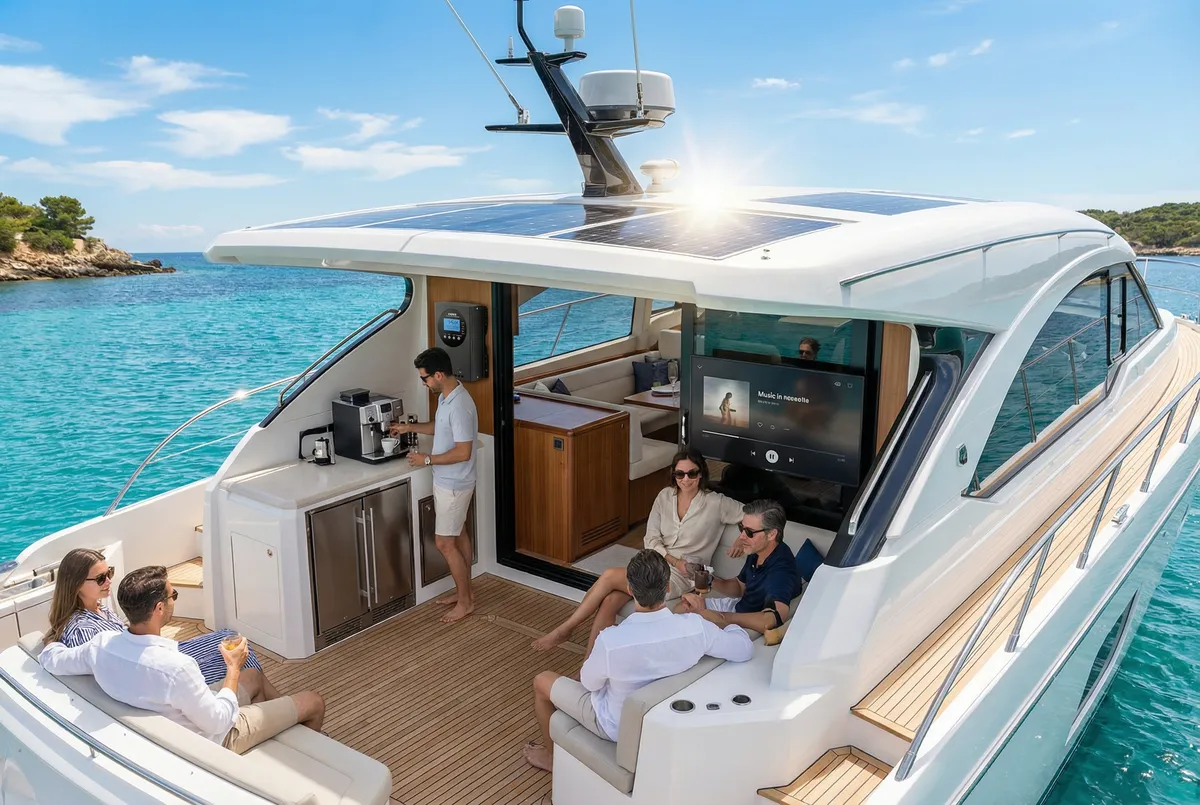
Configuration context
Begin with the actual DC architecture.
Supply planning begins with the platform’s DC voltage, expected auxiliary loads, usable mounting surface and destination. This keeps solar, charge control and energy storage aligned with the actual setup.
- Project inputPlatform type and usable mounting surface
- DC fitDC voltage, chemistry and auxiliary loads
- Supply planDestination, quantity and requested documents
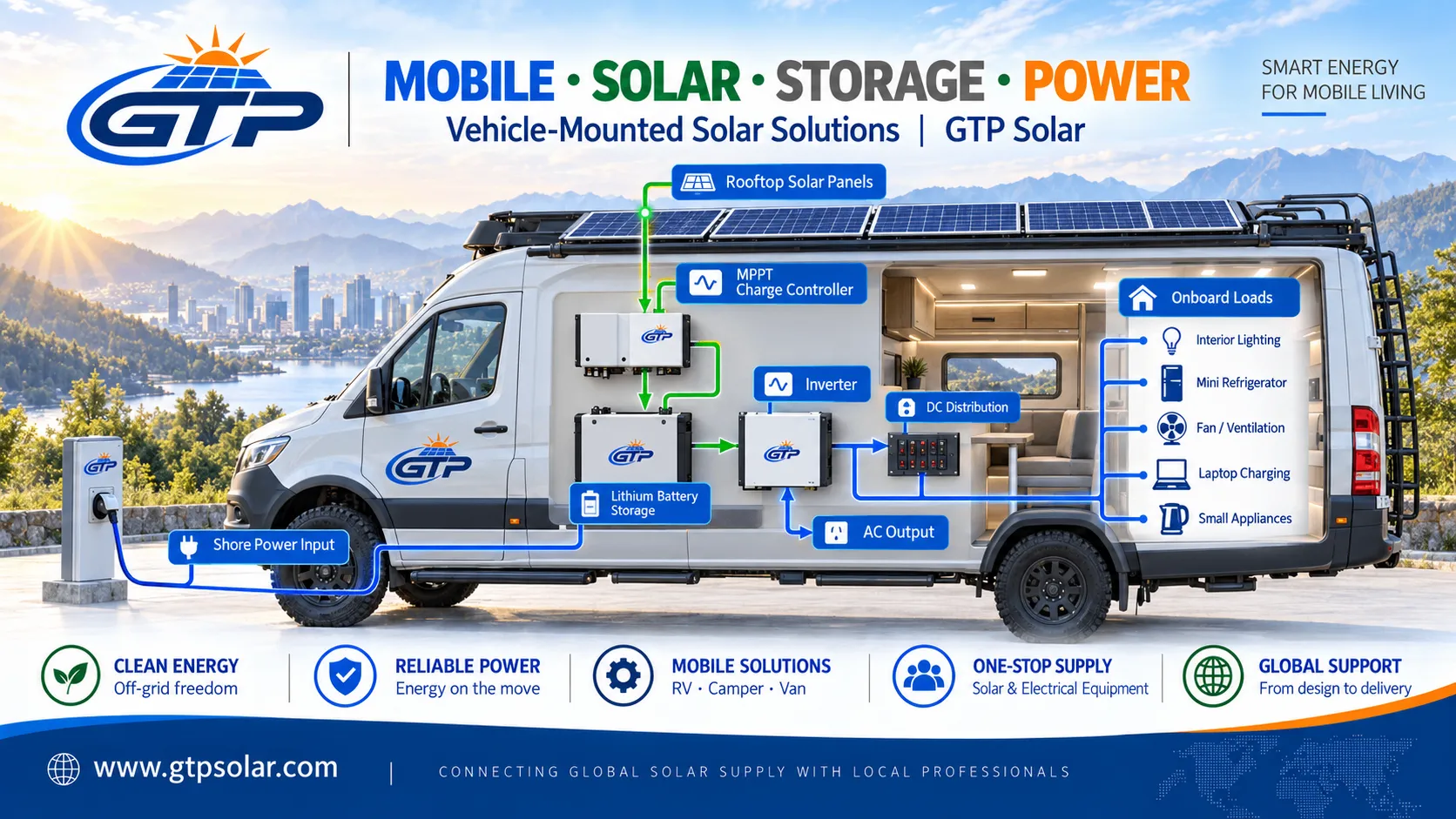
System overview
See the auxiliary-power package as one matched system.
Module layout, charging controls, battery capacity and the installation envelope are matched to the vehicle or vessel, duty cycle and supported loads.
APPLICATION ENGINEERING
Typical mobile and marine configuration
Indicative ranges for camper vans, RVs, workboats and yachts. Real output is governed by shading on the platform far more than by the module rating.
Illustrative selection information. Confirm the final specification for your model, site and delivery scope.
View full configuration & sizing factors
| Item | Typical specification | What decides it |
|---|---|---|
| Platform PV | 200 W to 1.2 kW | Usable deck or roof area and what shades it |
| System voltage | 12 V, 24 V or 48 V bus | Load size and cable runs |
| Charge control | MPPT solar controller or DC-DC from the alternator | Array voltage and battery bus |
| Battery | 1 to 10 kWh LFP, up to 8,000 cycles | Daily load and hours of autonomy |
| Inverter | Sized on continuous and surge AC load | Appliances that start under load |
| Environment | Marine-grade fittings and coating class | Salt exposure and vibration |
Indicative ranges for enquiry planning. Final values follow the site review and are confirmed in writing on your quote.
What usually goes wrong on this kind of project
- Modules chosen on nameplate watts while masts, air conditioning units and rails shade them for much of the day.
- Charge temperature limits ignored – a battery in a hot cabin or a cold deck will not accept charge.
- Standard fasteners used in a salt environment, corroding within a season.
- Inverter sized on continuous load only, so it trips on compressor or pump start-up surges.
Questions buyers ask
Should we run 12 V or 48 V?
Above roughly 2 kW of load, 48 V keeps current and cable losses manageable. Smaller systems stay on 12 V or 24 V.
Will it survive a marine environment?
With marine-grade fittings, 316 stainless hardware and the right coating class, yes. Tell us it is a salt environment at enquiry stage.
Can it charge from shore power or the engine?
Yes – via an AC charger or a DC-DC alternator charger. The charge profile has to match the battery chemistry.
How quickly does it ship?
Common mobile and marine specifications are held in U.S. warehouse inventory.
Send the platform type, available deck or roof area, the loads you run and how long you need to stay off shore power.
Solar modulesControllers and invertersLithium battery storageBalance-of-system buying guideSend your requirements
EXPLORE FURTHER