
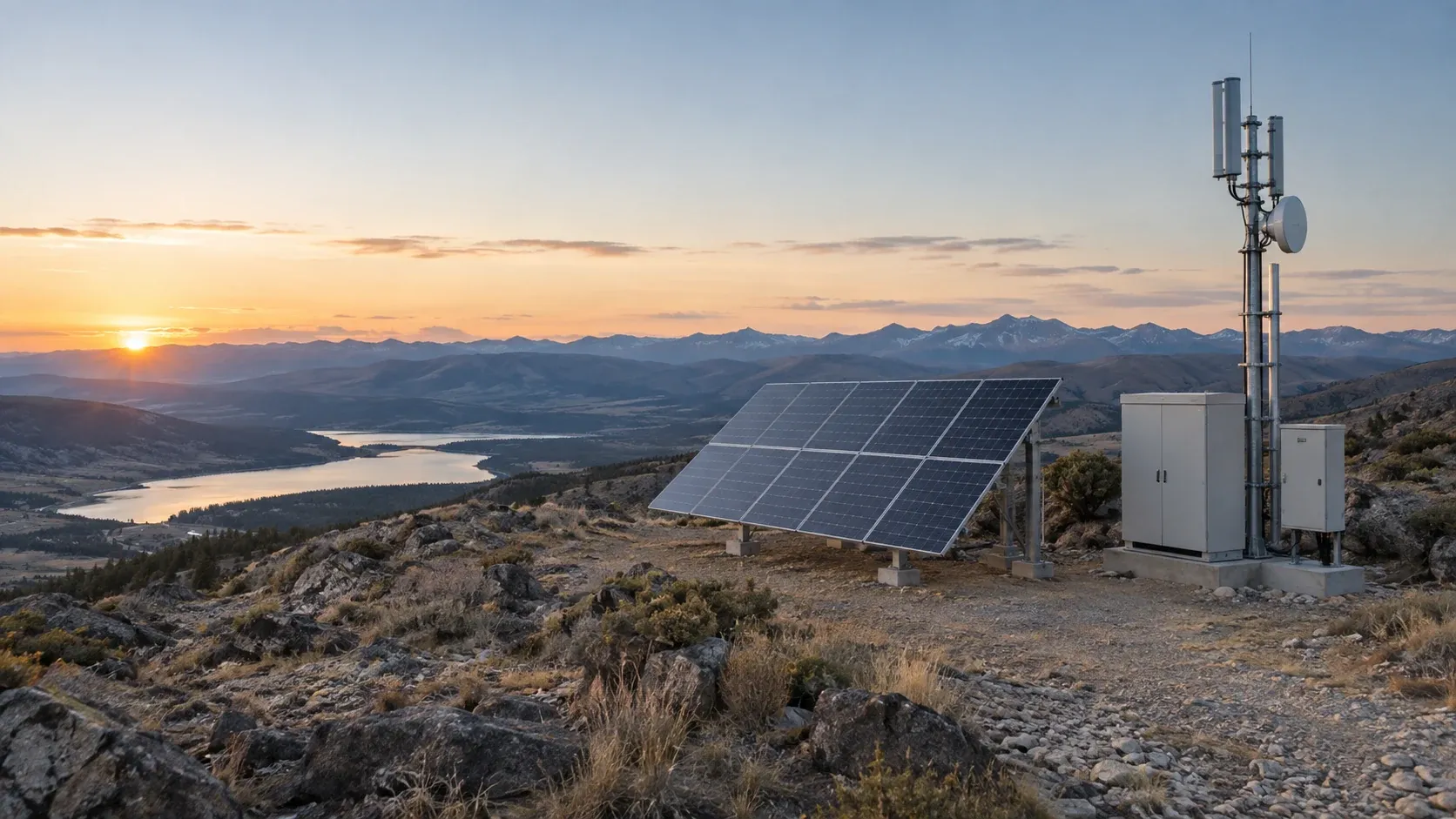
Off-grid · Telecom & remote power
Off-Grid, Telecom & Remote Power
Autonomous solar and lithium power equipment for remote sites where autonomy and reliable service access matter.
- Project-matched selectionEquipment, quantities and interfaces reviewed with your team
- U.S. warehouse inventoryDirect delivery to your specified U.S. location
- Documentation supportCertification documents for the selected equipment
Share your project location, quantities and target schedule — we confirm availability and a tailored quotation.
Equipment scope
Design for real operating autonomy.
Remote sites need an equipment mix grounded in daily energy demand, solar resource, storage autonomy and access for maintenance. We help create that purchasing brief.
Compact PV
Module options for remote structures, field equipment and constrained mounting areas.
MPPT control
Charge control compatible with common 12V, 24V, 36V and 48V systems.
Lithium storage
LiFePO4 storage for dependable autonomous operation.
Before quotation
Confirm the project conditions first.
Supply scope: equipment selection, material supply and documentation coordination. Permitting and site installation are completed by the buyer’s qualified installer or contractor where required.
- Daily energy use, surge loads and required autonomy period.
- Location, weather exposure and available mounting area.
- System voltage, target delivery date and destination.
Remote-site matching
Design autonomous power around the way the remote site is actually used.
For an off-grid site, the load profile, available solar resource and service access matter as much as the hardware. We help define a practical equipment approach from real operating conditions.
Demand & autonomy
Daily consumption, peak and surge loads, operating hours and the required battery autonomy period.
Location & exposure
Available solar area, weather, temperature, mounting conditions and access for service or delivery.
System architecture
DC voltage, charging approach, storage configuration, documentation and destination requirements.
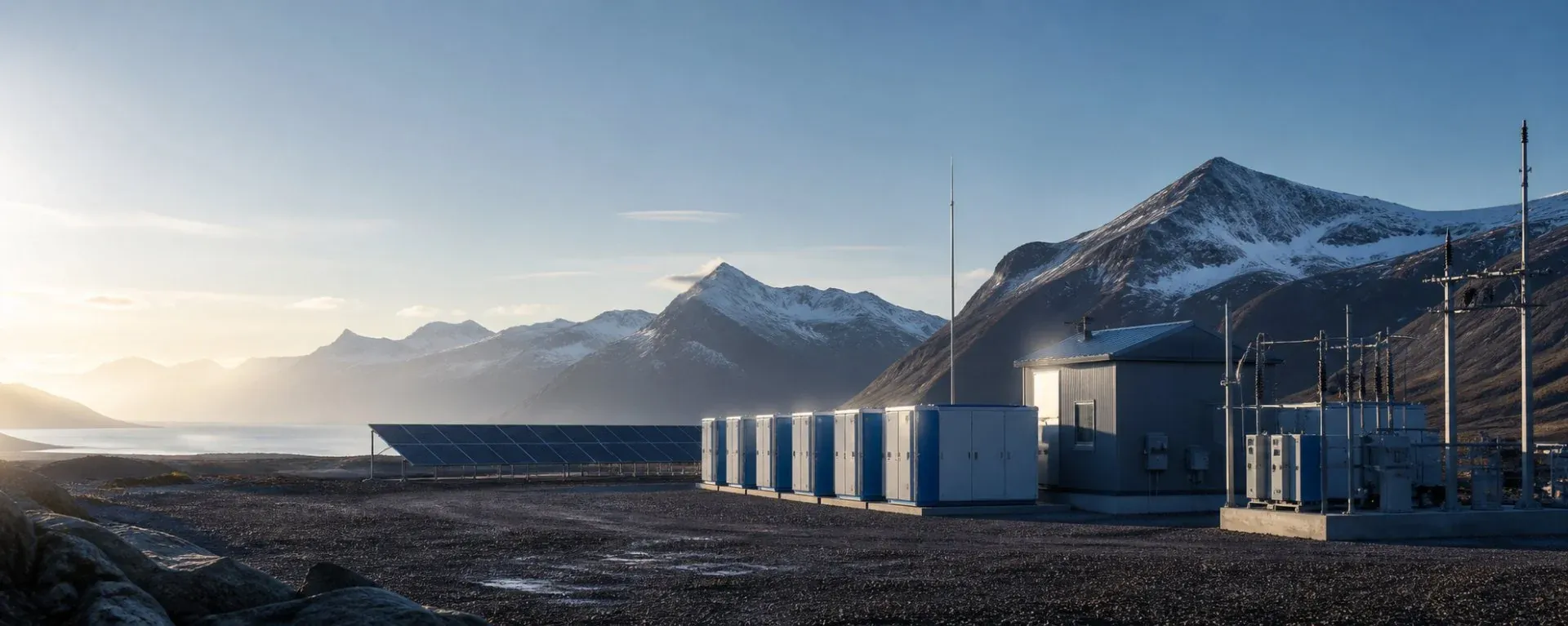
Configuration context
Make the autonomy target measurable.
Remote power equipment needs to be planned against actual daily consumption, surge loads, solar availability, weather exposure and the site’s access constraints. Those conditions determine a practical off-grid approach.
- Project inputDaily energy use and peak loads
- Autonomy fitSolar resource and required runtime
- Site contextWeather exposure, access and service needs
System overview
See the remote power package as one resilient operating system.
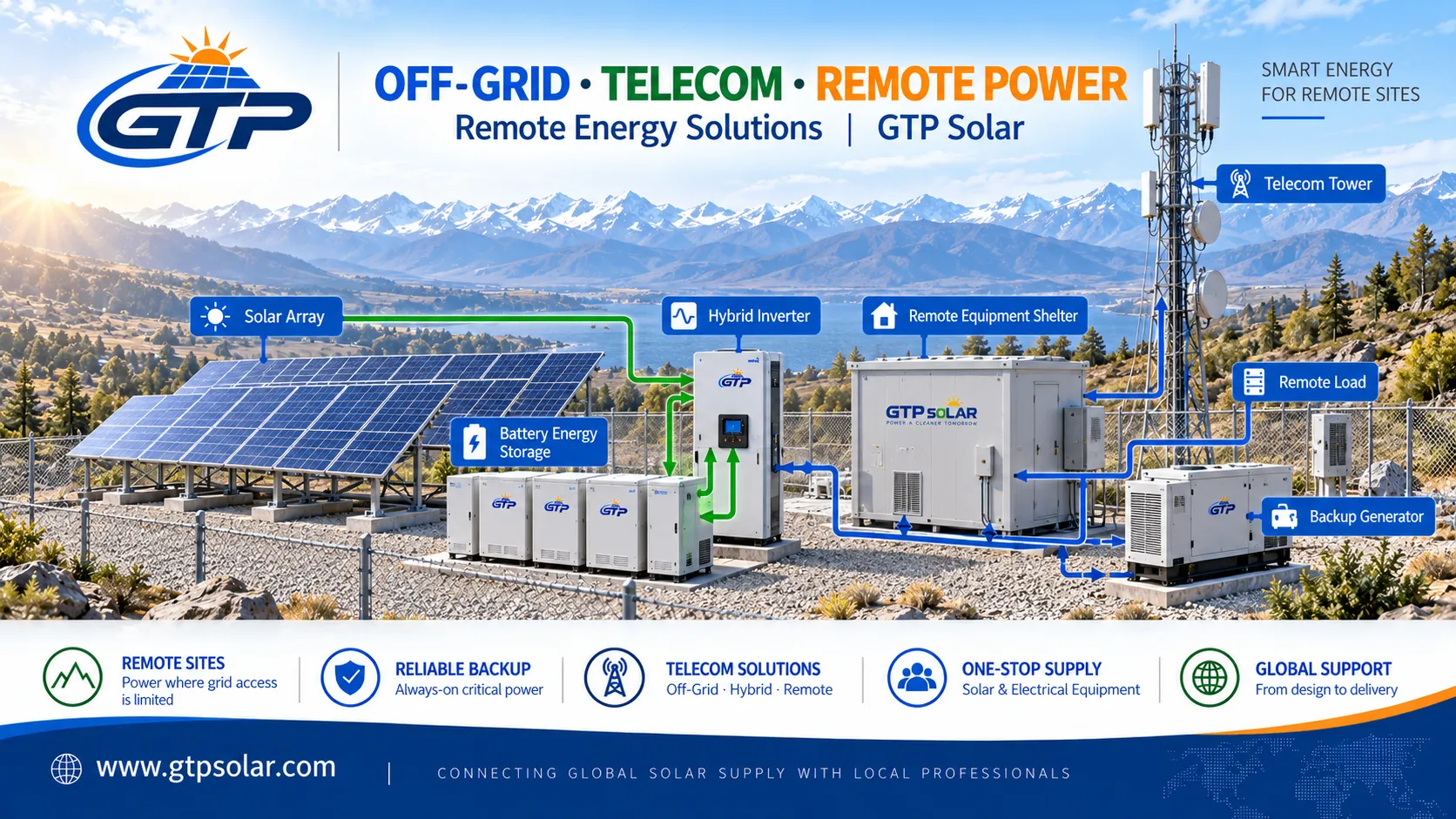
Solar, storage, control and backup generation are selected around the duty cycle, load priorities, site access and the service window.
APPLICATION ENGINEERING
Typical remote site configuration
Indicative ranges for telecom, monitoring and remote facility sites. Autonomy is designed from the worst month, not from the annual average.
Illustrative selection information. Confirm the final specification for your model, site and delivery scope.
View full configuration & sizing factors
| Item | Typical specification | What decides it |
|---|---|---|
| Array | 3 to 30 kW compact PV | Worst-month irradiance and available mounting area |
| Charge control | MPPT controllers, or DC-DC where the bus is fixed | Array voltage and battery bus |
| Battery | 20 to 200 kWh LFP, up to 8,000 cycles | Autonomy days and depth-of-discharge policy |
| Autonomy | 2 to 5 days typical | Consecutive overcast days and how fast a crew can reach the site |
| Enclosure | IP rated cabinet, with heating where needed | Ambient range, dust, salt, vandalism risk |
| Backup | Generator hybrid or pure solar-plus-storage | Fuel logistics and acceptable outage risk |
Indicative ranges for enquiry planning. Final values follow the site review and are confirmed in writing on your quote.
What usually goes wrong on this kind of project
- Sizing from average daily consumption instead of worst-month irradiance and required autonomy days.
- Ignoring the low-temperature charge limit of LFP cells – below freezing the battery cannot accept charge.
- Enclosure IP rating and security chosen for an indoor plant, then deployed at an exposed site.
- DC bus voltage not matched to the load (for example -48 V telecom equipment), forcing extra conversion.
Questions buyers ask
How many autonomy days do we need?
It follows from consecutive overcast days at your site plus how quickly a crew can physically reach it. Remote sites with monthly access need more than roadside sites.
Do we still need a generator?
Often a hybrid system is cheaper than sizing storage for the worst case, but the control logic has to be specified up front.
Can the battery handle the site temperature range?
We size the enclosure, heating and ventilation to your ambient range, and say so in writing on the quote.
How are lithium batteries shipped?
We handle lithium battery transport under U.S. DOT / HMR rules, including packaging and documentation.
Send the site load profile, autonomy requirement, ambient range and how often a crew can visit.
Battery energy storageSolar modulesControllers and invertersWhat remote telecom sites actually needSend your requirements
EXPLORE FURTHER