
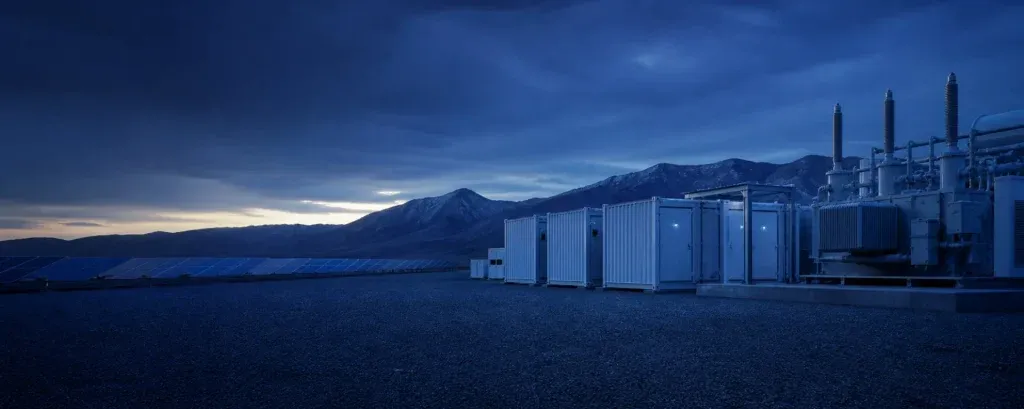
Balance of system – everything that is not a module or an inverter – is the part of a solar project that gets specified last and causes the most friction. It is also the part where two quotations for an identical array can differ by a wide margin, because the BOS line items are where suppliers quietly make different assumptions.
This guide covers the four BOS categories that most often decide whether a project is buildable on budget: mounting structure, transformers, switchgear and protection, and cabling. It is written for buyers putting together commercial and utility equipment lists.
Why BOS is where budgets break
Module and inverter pricing is transparent and comparable. BOS pricing is neither. A quotation that looks competitive on a per-watt basis can assume a lighter structure, a smaller transformer, a lower protection rating, or thinner cable than the project actually needs – and those assumptions only surface when the design is reviewed or, worse, when the inspection fails.
The practical defence is to specify BOS explicitly rather than accepting it as a bundled line. Name the design loads, the standards, and the ratings you are buying against.
Mounting structure: the roof type decides the design
Mounting is not a commodity; it is a structural component specified against a specific surface.
- Standing seam metal roof – clamps to the seam without penetration. Fast to install and preserves the roof warranty, but the seam profile and material must be confirmed before ordering.
- Trapezoidal / corrugated sheet – fixed through to the purlins. Requires penetration sealing and usually a structural check on purlin capacity.
- Flat concrete or membrane roof – ballasted or penetrating systems. Ballast adds dead load that the structure must carry; membrane roofs often require protection layers and compatible fixing methods.
- Ground mount and carport – foundation type (driven pile, ground screw, ballast or concrete) is a geotechnical decision. Soil conditions on site can change the foundation design after the order is placed.
Confirm the roof or ground condition in writing before the structure is designed. A structure ordered against the wrong assumption cannot be value-engineered later – it has to be replaced.
Wind, snow and corrosion: three numbers that decide everything
- Wind uplift – drives the fixing pattern, ballast mass and rail span. Taken from the applicable code for the site’s wind region, with the building height and exposure category applied.
- Snow load – drives module and rail loading. Relevant well beyond cold climates, because the governing code value often applies to a much wider area than buyers assume.
- Corrosion class – coastal, industrial and agricultural sites all accelerate corrosion. Anodised aluminium and stainless or appropriately coated steel should be specified against the actual environment, not a default.
Ask for the structural calculation, not just the datasheet. A reputable supplier will provide the wind and snow assessment for the specific site, and that document is usually what the building inspector asks for.
Transformers: sizing, vector group and losses
For any project connecting above low voltage, or with a large LV plant, the transformer is a significant line item with a long lead time. Specify:
- Rating and cooling – kVA rating sized against plant output and duty, with the cooling class (ONAN / ONAF or dry type) matched to the installation environment.
- Vector group and earthing arrangement – these must match the network requirement. Getting the vector group wrong is a replacement, not a fix.
- Losses – no-load and load losses. A transformer runs continuously; the difference between a standard and a low-loss unit is a lifetime energy cost, not a one-off.
- Impedance and tap arrangement – affects fault levels and voltage regulation on long feeders.
Options and specifications are on the transformers page.
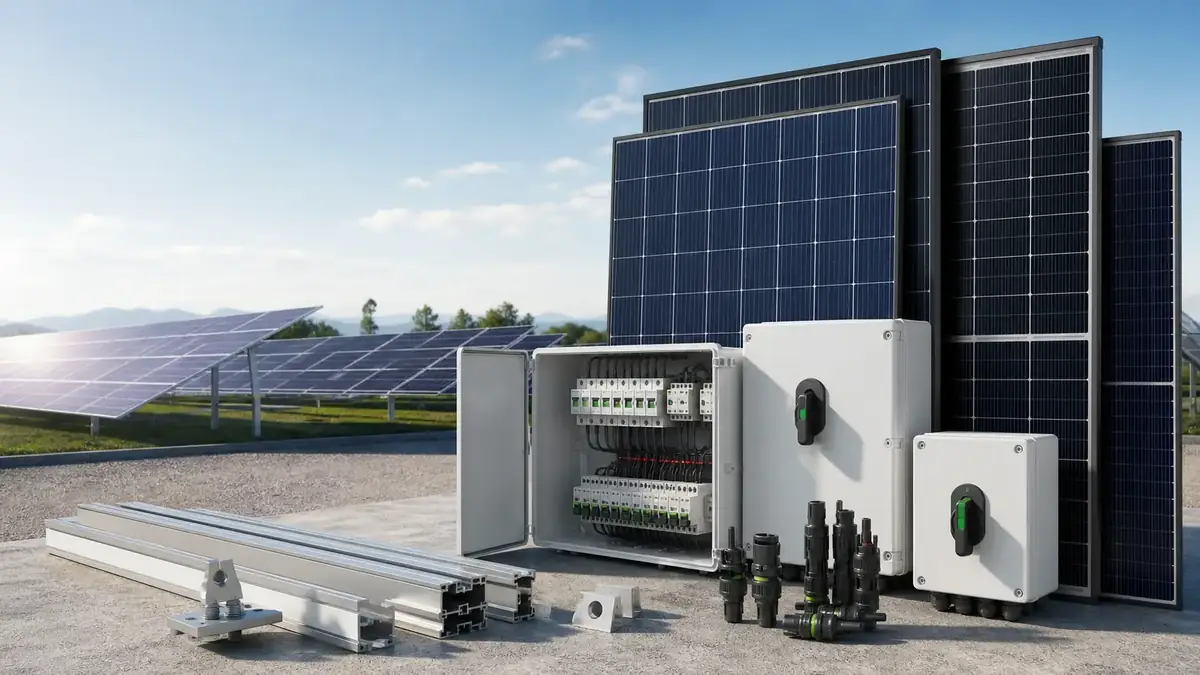
Switchgear and protection: do not under-specify this
Protection equipment is the category buyers are most tempted to economise on and the one where it is least advisable. Beyond the obvious rating requirements, confirm:
- Short-circuit rating adequate for the fault level at the point of connection, not just the nominal current.
- Appropriate protection functions – overcurrent, earth fault, and where required, directional or distance protection.
- Enclosure rating and form of separation appropriate to the location and the maintenance approach.
- Arc-flash considerations and the labelling and PPE implications for the operating team.
- Space and access for future expansion. A switchroom built to exactly today’s requirement is expensive to extend.
Protection specifications are usually reviewed by the network operator, so confirm requirements with them before the panel is built – lead times on switchgear are long, and a late change is a costly one. See the switchgear and distribution range.
Cabling and connectors: small items, large consequences
Cable is the least glamorous line item and one of the most consequential. Undersized DC cable is a permanent efficiency loss and a safety issue; the wrong insulation rating is a failure waiting for a hot summer. Confirm conductor sizing against both current-carrying capacity and voltage drop over the actual route length, UV and temperature rating for the exposed sections, and connector compatibility across suppliers. Mixed connector brands on the same string is a recurring source of warranty disputes.
Lead times and container planning
BOS items do not share a lead time. Mounting structure is typically quick; transformers and switchgear are not, and custom switchgear assemblies routinely run longer than the rest of the project. Plan the order schedule around the longest item, and plan container loading around volume rather than value – mounting structure and cable consume space far faster than they consume budget. Splitting a shipment to keep a critical path item moving is usually cheaper than a delayed energisation.
BOS specification checklist
Reference table
Swipe horizontally to view all columns →
| Category | Specify | Risk if assumed |
|---|---|---|
| Mounting | Roof or ground type, fixing method, structural calculation | Structure must be replaced |
| Loads | Wind region, snow load, corrosion class | Failed inspection or premature failure |
| Transformer | kVA, vector group, cooling, loss values | Replacement, network rejection |
| Switchgear | Fault level, protection functions, form, expansion space | Safety risk, expensive retrofit |
| Cabling | Sizing for current and voltage drop, UV and temperature rating | Permanent efficiency loss |
| Connectors | Brand consistency across the array | Warranty disputes |
| Logistics | Lead time on longest item, container volume plan | Delayed energisation |
Putting the list together
BOS is easiest to specify as part of a single equipment enquiry rather than as separate purchases, because the ratings are interdependent. Browse the full range on the products page – including mounting systems, transformers and switchgear and distribution – or send your single-line diagram and site conditions through the contact page for a coordinated list. For utility-scale projects, the utility-scale solar and grid page shows how these items fit together.
BUYER CHECKLIST
Buyer considerations for this scope
What is most often short-shipped?
Connectors, grounding lugs and clips, cable, labels, spare fuses, and the torque specification itself. These are cheap per unit and expensive per day lost, which is why they are worth listing explicitly rather than assuming they accompany the main equipment.
Are the small parts specified to the same standard as the large ones?
Connector brand and certification should match, cable should be rated for UV and wet locations, and lug material should be compatible with the rail to avoid galvanic corrosion. A mismatch here fails inspection or fails in year five, and neither is cheap.
How is a mid-installation shortage avoided?
Shipping the balance-of-system parts with the main equipment, listing the contents per container, and agreeing a spare allowance at order stage. Availability and spare allowance are confirmed per enquiry, since they depend on the order and the site.
PRACTICAL ANSWERS
Questions buyers ask about this
Why do BOS items break budgets?
Because they are quoted as allowances rather than as designed quantities. Cabling length, conduit, combiners and earthing are sized after the layout is fixed, so an early allowance almost always turns out low.
Which three numbers decide the mounting design?
Wind speed, snow load and corrosion exposure. Everything else follows from them, and they are site-specific rather than regional averages.
Where do transformers sit in BOS?
They are specified from the load profile and diversity, not from the array size, and the impedance and vector group have to be matched to the network. Sizing them from the array rating is the common error.
How do we keep BOS costs predictable?
Order the mounting, cabling, protection and electrical items against the same layout and consolidate them on the same delivery. Splitting them across suppliers is what turns a design change into a cost change.
EXPLORE FURTHER