
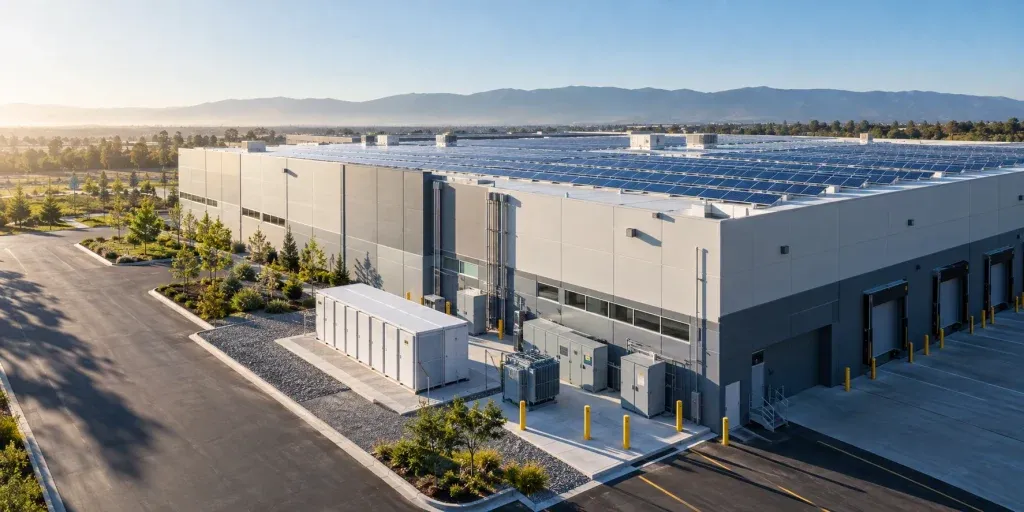
A commercial rooftop array is a 25-year asset sitting on a roof that may only have 12 years left. Deciding the roof first is not a formality — it is the difference between a straightforward project and one where the array has to come off again before it has paid for itself.
This page is for building owners, developers and the EPCs advising them, at the point where the roof can still be dealt with cheaply. It covers how much remaining roof life is enough, what penetrations do to a warranty, what to get in writing from the roof manufacturer, and the three failure modes that turn a good project into an expensive one.
Why the roof is decided before the array
A photovoltaic array does not shorten a roof’s life by itself, but it does two things that change the economics of the roof underneath.
It makes access expensive. Inspecting, repairing or replacing a roof under an array means removing and reinstating part of that array — ballast, modules, cabling and sometimes structure. That work is quoted by the array, not by the square metre, and it is the reason a roof problem discovered in year six costs several times what it would have cost in year one.
It also concentrates attention on the roof covering. Once an installer is on the roof every day for several weeks, defects that went unnoticed for years get noticed, and they get attributed to the installation whether or not that is fair.
The practical rule: if the roof has less remaining life than the array’s expected service life, deal with the roof first. Not after.
How much remaining roof life is enough
There is no single number, because it depends on the covering and on what the building owner intends to do with the building. What is defensible is a stated assumption rather than a silent one.
Reference table
Swipe horizontally to view all columns →
| Remaining roof life | What it usually means | Typical path |
|---|---|---|
| Under 5 years | The array will outlive the covering | Replace or overlay before installation |
| 5 to 10 years | The array will need to come off mid-life | Price the remove-and-reinstate now, or overlay |
| 10 to 15 years | Reasonable for a 25-year array with maintenance | Proceed, with the covering recorded before handover |
| Over 15 years | Roof is not the constraint | Proceed |
Where the roof sits in the 5-to-10 band, the decision usually turns on whether a remove-and-reinstate allowance is in the budget. If it is not, the honest answer is that the roof is the constraint, not the array.
“Remaining life” should come from someone qualified to state it — a roof consultant, the original installer, or the membrane manufacturer’s own inspection service — not from a visual walk by the solar contractor.
Penetrations, and what they do to a warranty
Most commercial roof warranties are written by the membrane manufacturer, and most of them distinguish between the membrane and the work done to it.
A non-penetrating system sits on ballast or on clamps that grip a standing seam. It leaves the membrane intact, which is why it is usually the easier conversation with the roof manufacturer.
A penetrating system fixes through the covering into the structural deck or purlin. On a metal profile this is often unavoidable. The two things that matter are whether the penetration is detailed by someone the manufacturer accepts, and whether it is recorded — an unrecorded penetration is the common reason a later claim is declined.
Two points decide most disputes:
- Who details the penetration. A fixing detail produced by the mounting supplier and accepted in writing by the roof manufacturer is a different position from one invented on site.
- Whether the warranty is a material warranty or a workmanship warranty. A material warranty covers the membrane failing. It does not usually cover a leak at a fixing that was installed by someone else.
On a standing-seam or corrugated metal roof, the fixing method is decided by the profile itself — see the roof mounting options, and confirm the seam or purlin gauge in writing before the layout is fixed.
What the roof manufacturer will and will not say
Getting this in writing before the design is fixed is the single cheapest thing on this page.
Ask three questions:
- Does adding an array affect the existing roof warranty? Some manufacturers will confirm in writing that a ballasted, non-penetrating system does not. Some will not comment at all, which is itself an answer.
- If penetrations are required, what detail do you require, and who must install it? Some require a licensed roofer, not the solar installer, to make and flash the penetration.
- Will you issue a warranty on the roof after the array is installed, and for how long? A new or extended roof warranty issued alongside the array is worth more than any assurance about the array itself.
The answer to the third question is often the one that moves the project. A roof recovered at the same time as the array can carry a fresh warranty running in step with the array’s life.
Membrane types and what each implies
Reference table
Swipe horizontally to view all columns →
| Covering | Typical approach | What to watch |
|---|---|---|
| TPO / PVC single-ply | Ballasted, or mechanically fixed with the manufacturer’s detail | Welded seams near ballast; protection sheet under ballast |
| EPDM | Ballasted, often with a protection layer | Ballast abrasion; EPDM is softer than TPO/PVC |
| Modified bitumen | Usually penetrating or adhered | Heat or torch work near an existing array is a hazard |
| Standing-seam metal | Non-penetrating seam clamps | Seam profile and clamp compatibility; confirm the gauge |
| Corrugated / trapezoidal metal | Brackets fixed into the purlin | Penetration detail and purlin gauge; the roof position in writing |
| Concrete deck with membrane | Ballasted | Deck capacity before ballast weight is added |
The pattern across all of them: the covering decides the fixing method, and the fixing method decides whether the roof manufacturer needs to be involved at all.
Drainage, and where the water goes afterwards
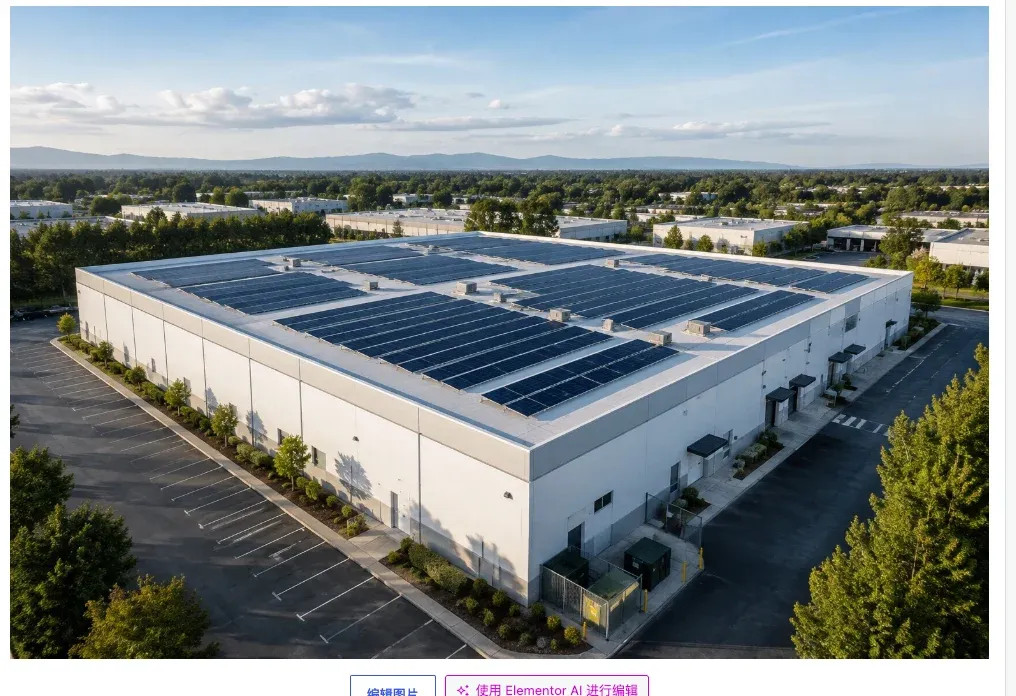
An array changes how water moves across a roof, and this is where complaints start.
- Ballasted systems can trap water if the protection layer bridges a drain.
- Cable runs laid across a drainage path will pond water where it did not pond before.
- Concentration of runoff at a new low point is a common cause of a leak that appears months after handover.
The check is simple and worth doing on the drawing: trace the drainage path with the array in place, and confirm every drain is still reachable for cleaning.
Ballast versus penetration: the load question underneath
Where a ballasted system is used, the ballast is not a rule of thumb. It is calculated from wind uplift at the roof zone, building height and surrounding terrain — corners and edges of a flat roof carry several times the uplift of the field, so one ballast figure across the whole roof will be wrong somewhere. The method is set out in the load calculation guide.
That calculated ballast then has to be carried by the deck. On an existing building, particularly one whose roof has already been overlaid once or twice, the deck capacity is worth confirming before the layout is fixed rather than after.
A structural calculation is issued per project against the actual covering, deck and module layout. Where a stamped calculation is required, that requirement belongs on the enquiry so it is priced and scheduled.
What to get in writing before installation
Six documents, and the project is defensible years later:
- Roof condition statement — remaining life, from a qualified party, dated before installation.
- Roof manufacturer position — on the array, on penetrations if any, and on the warranty afterwards.
- Fixing or ballast detail — the one actually used, with the calculation behind it.
- Penetration log — location, detail and installer for every penetration, if the system penetrates.
- Pre-installation photographs — dated, covering the whole roof, before anything is set down.
- Drainage confirmation — that every drain remains accessible after the array is in place.
None of these are expensive at the time. All of them are expensive to reconstruct when there is a leak and two parties who disagree about who caused it.
Where this goes wrong
The roof is assumed, not assessed. The most common cause of an array coming off early is that nobody established remaining roof life before the design was fixed.
Penetrations are made to a detail nobody approved. The leak appears later; the roof manufacturer declines because the penetration was not their detail; the installer says the membrane was already failing. Everyone loses.
Drainage is not re-checked. An array is installed, a drain becomes unreachable, water ponds, and the leak is reported as a roof defect when it is an access defect.
In each case the expense is not the repair. It is the remove-and-reinstate of the array to reach the roof.
How this fits the rest of the project
The roof decision sits upstream of everything else on a commercial rooftop job: it fixes the mounting method, the ballast or penetration detail, and the access plan for the next 25 years. For the wider scope on these projects, see commercial rooftop solar and the parent commercial and industrial solar page.
Two adjacent items are worth reading alongside this one. Module-side coverage behaves differently from roof-side coverage — the claim process is set out in the module warranty claims guide. And because roof access drives the cost of every later inspection, the maintenance plan in solar plant operations and maintenance is worth pricing at the same time as the roof, not after.
If you are at the point of pricing a rooftop array and the roof condition is still an open question, send the roof area, the covering type and whatever is known about its age — the fixing detail and the structural calculation can be scoped per project from there.
BUYER CHECKLIST
Buyer considerations for this scope
Who states the remaining roof life, and in what form?
A roof consultant, the original installer, or the membrane manufacturer inspection service, not a visual walk by the solar contractor. Ask for a dated written statement. It is the document that later decides whether a roof problem is a pre-existing condition or an installation defect, and it costs almost nothing at the time.
Is the roof manufacturer position on the array in writing?
Three answers matter before the design is fixed: whether the array affects the existing warranty, what penetration detail they require and who must install it, and whether they will issue a roof warranty afterwards and for how long. The third answer is often what moves the project, because a roof recovered alongside the array can carry a fresh warranty running in step with the array life.
Is a remove-and-reinstate allowance in the budget?
If the roof sits in the five-to-ten year band, the array will have to come off mid-life to reach the roof. That work is quoted by the array rather than by the square metre, and it costs several times the same repair done before installation. Price it now, or treat the roof as the constraint and deal with it first.
PRACTICAL ANSWERS
Questions buyers ask about this
How much remaining roof life do we need before an array goes on?
Enough to cover the period you intend to keep the array in place. Under five years, replace or overlay first. Between five and ten, price a remove-and-reinstate allowance before committing. Ten to fifteen years is workable for a 25-year array if the covering is recorded before handover. What matters is that the figure comes from a qualified party and is dated, rather than assumed.
Will a ballasted array void the existing roof warranty?
Usually not, but it has to be confirmed by the membrane manufacturer rather than assumed. A ballasted, non-penetrating system leaves the membrane intact, and some manufacturers will confirm in writing that the warranty is unaffected. Ask before the design is fixed, because the answer can change the fixing method.
Who is responsible if a penetration leaks?
It turns on whether the penetration was detailed by someone the roof manufacturer accepts, and whether it was recorded. A material warranty generally covers the membrane failing, not a leak at a fixing installed by another party. A penetration log with location, detail and installer is what settles the question years later.
Does the array change how water drains off the roof?
Yes. Ballast and protection layers can bridge a drain, and cable runs laid across a drainage path create ponding where there was none. Trace the drainage path on the drawing with the array in place and confirm every drain is still reachable for cleaning. A blocked drain is often reported as a roof defect when it is really an access defect.
EXPLORE FURTHER